Bonvenon al Laŭzano per Esperanto Bienvenue à Lausanne avec l'Espéranto Welcome to Lausanne through Esperanto
Lernejo, kulturo kaj amikeco ekde 1906 Éducation, culture et amitié depuis 1906 Education, culture & friendship since 1906
Aliĝu al niaj renkontiĝoj Rejoignez nos rencontres Join our meetingsPri la Societo À propos de la Société About the Society
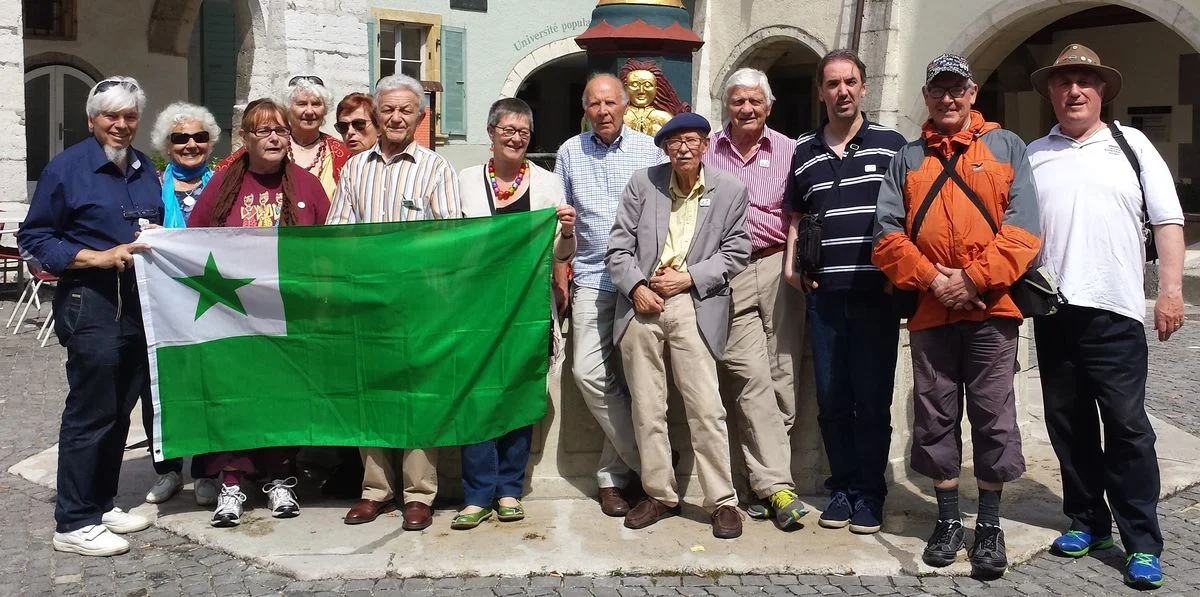
La Laŭzana Esperanto-Societo estas loka grupo kiu disvastigas la internacian lingvon Esperanton en la kantono Vaŭdo. Ni organizas kursojn, kulturajn vesperojn, kaj subtenas membrojn en ilia lingva vojaĝo. Niaj celoj estas paco, interkompreniĝo kaj praktika uzo de neŭtrala lingvo.
Ni estas membroj de Svisa Esperanto-Societo kaj kunlaboras kun lokaj institucioj kaj universitatoj.
La Société Lausannoise d'Espéranto est un groupe local qui promeut la langue internationale Esperanto dans le canton de Vaud. Nous organisons des cours, des soirées culturelles et accompagnons nos membres dans leur apprentissage. Nos objectifs sont la paix, la compréhension mutuelle et l'usage pratique d'une langue neutre.
Nous sommes membres de la Société Suisse d'Esperanto et collaborons avec des institutions locales et universitaires.
The Lausanne Esperanto Society is a local group promoting the international language Esperanto in the canton of Vaud. We organize courses, cultural evenings, and support members on their language journey. Our goals are peace, mutual understanding, and the practical use of a neutral language.
We are members of the Swiss Esperanto Society and collaborate with local institutions and universities.
❓ Kio estas Esperanto? ❓ Qu'est-ce que l'espéranto ? ❓ What is Esperanto?

Esperanto estas internacia komunikilo kreita por kunigi homojn trans lingvaj kaj kulturaj limoj. Ĝin ellaboris fine de la 19-a jarcento la pola okulkuracisto Ludwik Lejzer Zamenhof (1859–1917), kiu kredis, ke komuna, neŭtrala lingvo povas helpi konstrui pacon kaj interkompreniĝon.
La lingvo baziĝas sur simpla, regula gramatiko sen esceptoj kaj uzas aglutinan strukturon: novaj vortoj formiĝas per kombino de radikoj kaj afiksoj. Ĉi tiu dezajno faciligas lernadon: multaj homoj atingas konversacian nivelon post nur kelkaj monatoj da studo.
Esperanto estas la sola planlingvo, kiu evoluis al vivanta komunuma lingvo. Ĝi havas parolantojn en ĉiuj kontinentoj, literaturon, muzikojn, filmojn, fikciojn, podkastojn, kaj ĉiujaran Universalan Kongreson. Kvankam ĝi ne estas oficiala lingvo de iu ŝtato, ĝi servas kiel laborlingvo por pluraj internaciaj organizaĵoj, inkluzive de la Universala Esperanto-Asocio (UEA), kiu kunlaboras kun la Unuiĝintaj Nacioj kaj UNESCO.
Esperanto ankaŭ estas unu el la laborlingvoj de la Internacia Akademio de Sciencoj de San-Marino, kaj ofertas oficialajn ekzamenojn tra la Instituto pri Lingvaj Ekzamenoj (ITK), kie ĝi rangas tria laŭ nombro da kandidatoj post la angla kaj germana.
📊 Kiom da homoj parolas Esperanton? Taksoj varias laŭ difino de "paroli". Studoj sugestas de ĉ. 100 000 aktivaj parolantoj ĝis 2 milionoj kun progresinta nivelo. UNESCO agnoskis la kontribuon de Esperanto al internacia edukado kaj kulturo en 1985.
L'espéranto est conçu comme un outil de communication internationale pour rapprocher les personnes au-delà des frontières linguistiques et culturelles. Il a été développé à la fin du XIXe siècle par le médecin ophtalmologue polonais Ludwik Lejzer Zamenhof (1859–1917), qui croyait qu'une langue commune et neutre pouvait favoriser la paix et la compréhension mutuelle.
La langue repose sur une grammaire simple et régulière, sans exceptions, et utilise une structure agglutinante : de nouveaux mots se forment en combinant des racines et des affixes. Cette conception facilite l'apprentissage : de nombreuses personnes atteignent un niveau conversationnel après seulement quelques mois d'étude.
L'espéranto est la seule langue planifiée à être devenue une langue vivante, pratiquée par des communautés sur tous les continents. Elle possède une littérature, de la musique, des films, des fictions, des podcasts, et un Congrès Mondial annuel. Bien qu'il ne soit la langue officielle d'aucun État, il sert de langue de travail à plusieurs organisations internationales, dont l'Association Universelle d'Espéranto (UEA), en relation avec l'ONU et l'UNESCO.
L'espéranto est également l'une des langues de travail de l'Académie Internationale des Sciences de Saint-Marin, et propose des examens officiels via l'Institut des Langues Étrangères (ITK), où il occupe la 3e place en nombre de candidats après l'anglais et l'allemand.
📊 Combien de personnes parlent espéranto ? Les estimations varient selon la définition de « parler ». Les études suggèrent entre ~100 000 locuteurs actifs et ~2 millions avec un niveau avancé. L'UNESCO a reconnu la contribution de l'espéranto à l'éducation et à la culture internationales en 1985.
Esperanto was designed as an international communication tool to bring people together across linguistic and cultural boundaries. It was developed in the late 19th century by the Polish ophthalmologist Ludwik Lejzer Zamenhof (1859–1917), who believed that a common, neutral language could help build peace and mutual understanding.
The language is based on simple, regular grammar with no exceptions and uses an agglutinative structure: new words form by combining roots and affixes. This design makes learning accessible: many people reach conversational fluency after just a few months of study.
Esperanto is the only planned language to have evolved into a living community language. It has speakers on every continent, along with literature, music, movies, fictions, podcasts, and an annual World Congress. While it is not an official language of any country, it serves as a working language for several international organizations, including the Universal Esperanto Association (UEA), which collaborates with the United Nations and UNESCO.
Esperanto is also one of the working languages of the International Academy of Sciences San Marino, and offers official examinations through the Institute for Foreign Language Examinations (ITK), where it ranks third in number of candidates after English and German.
📊 How many people speak Esperanto? Estimates vary depending on how "speaking" is defined. Studies suggest between ~100,000 active speakers and ~2 million with advanced proficiency. UNESCO recognized Esperanto's contribution to international education and culture in 1985.
👨⚕️ La Vizio de Zamenhof 👨⚕️ La Vision de Zamenhof 👨⚕️ Zamenhof's Vision
Ludwik Lejzer Zamenhof naskiĝis en 1859 en Bjalistoko, urbo kie kunvivis diversaj kulturoj kaj lingvoj. Spertante lingvajn barojn kaj intergrupajn tensiojn, li komencis imagi solvon: lingvon, kiun ĉiu povus lerni facile, sen forlasi sian propran identecon.
Je 19 jaroj, li jam prezentis sian unuan projekton, «Lingwe Uniwersala». Post jaroj da rafinado, li publikigis en 1887 la bazon de Esperanto sub la pseŭdonimo Doktoro Esperanto: «la kuracisto kiu esperas». Li ne volis esti «posedanto» de la lingvo; li deziris, ke ĝi evoluigu sin per la uzado de homoj tutmonde.
En 1905, la unua Universala Kongreso en Boulogne-sur-Mer kunigis 688 partoprenantojn el 20 landoj kaj adoptis la Fundamenton, la stabilan kernon de la lingvo. Zamenhof ĉeestis kiel egalulo inter egaluloj, emfazante ke Esperanto apartenas al ĉiuj, kiuj ĝin uzas.
Lia legado de lingvoj (li parolis pli ol dek) helpis lin krei lingvon kaj internacie kompreneblan kaj kulturale neŭtralan. Lia humanisma idealo, paco per interkompreniĝo, restas la koro de la Esperanto-movado hodiaŭ.
🇨🇭 Du el liaj infanoj, Adam kaj Sophia, studis medicinon en Laŭzano, ligante la familian heredaĵon al nia regiono.
Ludwik Lejzer Zamenhof est né en 1859 à Białystok, une ville où coexistaient diverses cultures et langues. Confronté aux barrières linguistiques et aux tensions entre communautés, il a commencé à imaginer une solution : une langue que chacun pourrait apprendre facilement, sans renoncer à son identité propre.
À 19 ans, il présenta déjà son premier projet, « Lingwe Uniwersala ». Après des années de raffinement, il publia en 1887 les bases de l'espéranto sous le pseudonyme Doktoro Esperanto : « le docteur qui espère ». Il ne voulait pas être « propriétaire » de la langue ; il souhaitait qu'elle évolue grâce à l'usage des personnes du monde entier.
En 1905, le premier Congrès Universel à Boulogne-sur-Mer réunit 688 participants de 20 pays et adopta le Fundamento, le noyau stable de la langue. Zamenhof y participa en égal parmi égaux, soulignant que l'espéranto appartient à tous ceux qui l'utilisent.
Sa maîtrise de nombreuses langues (il en parlait plus de dix) l'aida à créer une langue à la fois internationalement compréhensible et culturellement neutre. Son idéal humaniste, la paix par la compréhension mutuelle, reste au cœur du mouvement espérantiste aujourd'hui.
🇨🇭 Deux de ses enfants, Adam et Sophia, ont étudié la médecine à Lausanne, reliant l'héritage familial à notre région.
Ludwik Lejzer Zamenhof was born in 1859 in Białystok, a city where diverse cultures and languages coexisted. Experiencing linguistic barriers and intergroup tensions, he began to imagine a solution: a language that anyone could learn easily, without giving up their own identity.
At age 19, he already presented his first project, "Lingwe Uniwersala". After years of refinement, he published the foundations of Esperanto in 1887 under the pseudonym Doktoro Esperanto: "the doctor who hopes". He did not wish to "own" the language; he wanted it to evolve through use by people worldwide.
In 1905, the first World Congress in Boulogne-sur-Mer brought together 688 participants from 20 countries and adopted the Fundamento, the stable core of the language. Zamenhof participated as an equal among equals, emphasizing that Esperanto belongs to everyone who uses it.
His knowledge of many languages (he spoke more than ten) helped him create a language that is both internationally understandable and culturally neutral. His humanistic ideal, peace through mutual understanding, remains at the heart of the Esperanto movement today.
🇨🇭 Two of his children, Adam and Sophia, studied medicine in Lausanne, connecting the family legacy to our region.
🌐 Komunumo tutmonda 🌐 Une communauté mondiale 🌐 A Global Community
Esperanto vivas tra homoj. Ĉiujare, miloj da parolantoj kunvenas en la Universala Kongreso, organizita de la UEA. Krom tio, ekzistas temaj asocioj por instruistoj (ILEI), junuloj (TEJO), fervojistoj, kuracistoj, ĵurnalistoj kaj multaj aliaj grupoj.
La lingvo inspiris verkistojn, muzikistojn, sciencistojn kaj aktivulojn. Inter la homoj, kiuj lernis aŭ subtenis Esperanton, troviĝas nomoj kiel Jules Verne (prezidento de la esperanta asocio de Amiens), Albert Einstein, Umberto Eco kaj Mahatma Gandhi — ĉiu laŭ sia maniero kontribuinta al ideo de interkultura dialogo.
Per interreto, Esperanto atingis novajn generaciojn: ekzistas lerniloj, podkastoj, YouTube-kanaloj, kaj sociaj retoj dediĉitaj al la lingvo. Ĝi restas praktika iloj por vojaĝi, amikiĝi trans landlimoj, kaj partopreni internaciajn projektojn.
L'espéranto vit grâce à ses locuteurs. Chaque année, des milliers de personnes se retrouvent au Congrès Mondial, organisé par l'UEA. Par ailleurs, il existe des associations thématiques pour les enseignants (ILEI), les jeunes (TEJO), les cheminots, les médecins, les journalistes et bien d'autres groupes.
La langue a inspiré des écrivains, musiciens, scientifiques et militants. Parmi les personnes ayant appris ou soutenu l'espéranto figurent des noms comme Jules Verne (président de l’Association Espérantophone d’Amiens), Albert Einstein, Umberto Eco et Mahatma Gandhi — chacun à sa manière ayant contribué à l'idée de dialogue interculturel.
Grâce à internet, l'espéranto atteint de nouvelles générations : il existe des applications d'apprentissage, des podcasts, des chaînes YouTube et des réseaux sociaux dédiés à la langue. Il reste un outil pratique pour voyager, se faire des amis au-delà des frontières et participer à des projets internationaux.
Esperanto lives through its speakers. Each year, thousands gather at the World Congress, organized by the UEA. Additionally, there are thematic associations for teachers (ILEI), youth (TEJO), railway workers, medical professionals, journalists, and many other groups.
The language has inspired writers, musicians, scientists, and activists. Among those who learned or supported Esperanto are names like Jules Verne (president of the Amiens Esperanto association), Albert Einstein, Umberto Eco, and Mahatma Gandhi — each contributing in their own way to the idea of intercultural dialogue.
Thanks to the internet, Esperanto reaches new generations: there are learning apps, podcasts, YouTube channels, and social networks dedicated to the language. It remains a practical tool for traveling, making friends across borders, and participating in international projects.
🇨🇭 Svislando kaj Esperanto 🇨🇭 La Suisse et l'espéranto 🇨🇭 Switzerland and Esperanto
Svislando, kun sia multlingveco kaj neŭtraleco, ĉiam estis grava centro por Esperanto. La Svisa Esperanto-Societo (SES) fondiĝis en 1903 en Rolle kaj rapide fariĝis aktiva parto de la tutmonda movado.
Pioniroj kiel René de Saussure, Hector Hodler kaj Edmond Privat helpis strukturi la movadon kaj kunligi ĝin kun internaciaj institucioj. Pro iliaj klopodoj, Ĝenevo iĝis la sidejo de la UEA en 1908, pozicio, kiun ĝi tenis dum jardekoj.
Svislando gastigis la Universalan Kongreson sesfoje (Ĝenevo, Berno, Lucerno), kaj hodiaŭ pluraj lokaj grupoj — en Bazelo, Zuriko, Ĝenevo, Lucerno kaj aliloke — daŭre vivigas la lingvon per renkontiĝoj, kursoj kaj kulturaj eventoj. En La Chaux-de-Fonds, la Esperanto-Kultura Centro (KCE) ofertas gastigon kaj dokumentadon por vizitantoj el la tuta mondo. En la sama urbo, la Centro de Dokumentado kaj Esploro pri la Lingvo Internacia (CDELI), fondita en 1967, havas siajn oficejojn en la Urba Biblioteko kaj konservas pli ol 20 000 dokumentojn pri Esperanto kaj aliaj planlingvoj.
La Suisse, avec son multilinguisme et sa neutralité, a toujours été un centre important pour l'espéranto. La Société Suisse d'Espéranto (SES) fut fondée en 1903 à Rolle et devint rapidement une partie active du mouvement mondial.
Des pionniers comme René de Saussure, Hector Hodler et Edmond Privat ont aidé à structurer le mouvement et à le relier aux institutions internationales. Grâce à leurs efforts, Genève est devenue le siège de l'UEA en 1908, une position qu'elle a occupée pendant des décennies.
La Suisse a accueilli le Congrès Mondial à six reprises (Genève, Berne, Lucerne), et aujourd'hui plusieurs groupes locaux — à Bâle, Zurich, Genève, Lucerne et ailleurs — continuent d'animer la langue par des rencontres, des cours et des événements culturels. À La Chaux-de-Fonds, le Centre Culturel Espérantophone (KCE) offre hébergement et documentation aux visiteurs du monde entier. Dans la même ville, le Centre de documentation et d'étude sur la langue internationale (CDELI), fondé en 1967, a ses bureaux au sein de la Bibliothèque de la Ville et conserve plus de 20 000 documents sur l'espéranto et les autres langues construites.
Switzerland, with its multilingualism and neutrality, has always been an important hub for Esperanto. The Swiss Esperanto Society (SES) was founded in 1903 in Rolle and quickly became an active part of the global movement.
Pioneers like René de Saussure, Hector Hodler, and Edmond Privat helped structure the movement and connect it with international institutions. Thanks to their efforts, Geneva became the headquarters of the UEA in 1908, a position it held for decades.
Switzerland has hosted the World Congress six times (Geneva, Bern, Lucerne), and today several local groups — in Basel, Zurich, Geneva, Lucerne, and elsewhere — continue to bring the language to life through meetings, courses, and cultural events. In La Chaux-de-Fonds, the Esperanto Cultural Center (KCE) offers accommodation and resources for visitors from around the world. In the same city, the Centre for Documentation and Study of the International Language (CDELI), founded in 1967, has its offices within the Municipal Library and holds more than 20,000 documents on Esperanto and other constructed languages.
🏙️ Nia historio en Laŭzano 🏙️ Notre histoire à Lausanne 🏙️ Our Story in Lausanne
La unuaj esperantistoj kunvenis en Laŭzano jam en 1903. Tri jarojn poste, en 1906, la Laŭzana Esperanto-Societo (LES) oficiale fondiĝis, kun la subteno de la Svisa Societo. De la komenco, la grupo emfazis malfermitecon: kursoj por komencantoj, kulturaj vesperoj, kaj amikecaj renkontiĝoj.
Hodiaŭ, LES kunigas ĉirkaŭ 60 membrojn kaj pli ol 100 simpatiantojn. Niaj ĉefaj agadoj inkluzivas:
- Renkontiĝojn: prelegoj, filmoj aŭ diskutoj pri temoj de komuna intereso;
- Babiladajn rondojn: neformalaj konversacioj por praktiki la lingvon en varma etoso;
- Publikajn standojn dum la bela sezono ĉe Place de la Palud, kun senpagaj enkondukaj kursoj por interesitoj;
- Zamenhofan Feston ĉirkaŭ la 15-a de decembro, por celebri la naskiĝtagon de la kreinto kaj la vivon de nia komunumo
Ni kredas, ke lingvo kreskas per uzado kaj ke ĉiu nova parolanto alportas sian unikan voĉon al la tutmonda dialogo.
Les premiers espérantistes se sont réunis à Lausanne dès 1903. Trois ans plus tard, en 1906, la Société Lausannoise d'Espéranto (LES) fut officiellement fondée, avec le soutien de la Société Suisse. Dès le départ, le groupe a mis l'accent sur l'ouverture : cours pour débutants, soirées culturelles et rencontres conviviales.
Aujourd'hui, LES compte environ 60 membres et plus de 100 sympathisants. Nos activités principales incluent :
- Des rencontres : conférences, films ou discussions sur des sujets d'intérêt commun ;
- Des cercles de conversation: échanges informels pour pratiquer la langue dans une ambiance chaleureuse ;
- Des stands publics en belle saison à la Place de la Palud, avec des cours d'initiation gratuits pour les personnes intéressées ;
- La Fête Zamenhof autour du 15 décembre, pour célébrer l'anniversaire du créateur et la vie de notre communauté.
Nous croyons qu'une langue grandit par l'usage et que chaque nouveau locuteur apporte sa voix unique au dialogue mondial.
The first Esperanto speakers gathered in Lausanne as early as 1903. Three years later, in 1906, the Lausanne Esperanto Society (LES) was officially founded, with support from the Swiss Society. From the beginning, the group emphasized openness: courses for beginners, cultural evenings, and friendly meetups.
Today, LES brings together around 60 members and over 100 supporters. Our main activities include:
- Gatherings: lectures, films, or discussions on topics of shared interest;
- Conversation circles: informal chats to practice the language in a warm atmosphere;
- Public booths in fair weather at Place de la Palud, with free introductory courses for interested people;
- Zamenhof Day celebrations around 15 December, honoring the creator's birthday and the life of our community.
We believe that a language grows through use and that every new speaker brings their unique voice to the global dialogue.
Aktivaĵoj & Eventoj Activités & Événements Activities & Events
Monataj RenkontiĝojRencontres mensuellesMonthly Meetups
Unua mardo de ĉiu monato, 19:00 – 21:00Premier mardi de chaque mois, 19h00 – 21h00First Tuesday of each month, 19:00 – 21:00
Babilado, ludoj kaj kulturo en malferma etoso.Conversation, jeux et culture dans une ambiance ouverte.Conversation, games & culture in a welcoming atmosphere.
KursojCoursCourses
Havebla laŭpete. Por komencantoj kaj plukomencantoj.Disponibles sur demande. Pour débutants et avancés.Available on demand. For beginners and advanced learners.
📅 Plena Kalendaro 📅 Calendrier complet 📅 Full Calendar
Eventoj de EventaServo (pasintaj kaj venontaj): Événements via EventaServo (passés et à venir): Events from EventaServo (past & upcoming):
Biblioteko Bibliothèque Library
Niaj libroj kaj materialoj pri Esperanto kaj rilataj temoj. Nos livres et matériaux sur l'espéranto et les sujets associés. Our books and materials on Esperanto and related topics.
Ŝargado de la biblioteko…Chargement de la bibliothèque…Loading the library…
La biblioteko estas momente neatingebla.La bibliothèque est momentanément indisponible.The library is temporarily unavailable.
La biblioteko ankoraŭ ne enhavas erojn.La bibliothèque ne contient pas encore de documents.The library has no items yet.
Neniu ero kongruas kun via serĉo. Aucun document ne correspond à votre recherche. No items match your search.
Rimedoj & Dokumentoj Ressources & Documents Resources & Documents
▶ LES Jutubo kanalo Chaîne YouTube de LES LES YouTube channel
Jen la plej aktualaj dosieroj de nia societo. Alklaku por elŝuti. Voici les documents les plus récents de notre société. Cliquez pour télécharger. Here are the latest files from our society. Click to download.
Kontaktu Nin Contactez-nous Contact Us
📧 Retpoŝto:Email:Email: sekretario@esperanto-lausanne.ch
📞 Telefono:Téléphone:Phone: +41 21 647 29 28
Ĉu vi havas demandojn pri kursoj, membreco aŭ eventoj? Skribu al ni! Une question sur les cours, l'adhésion ou les événements ? Écrivez-nous ! Have questions about courses, membership, or events? Email us!